Cycle 1 - The Welcome.
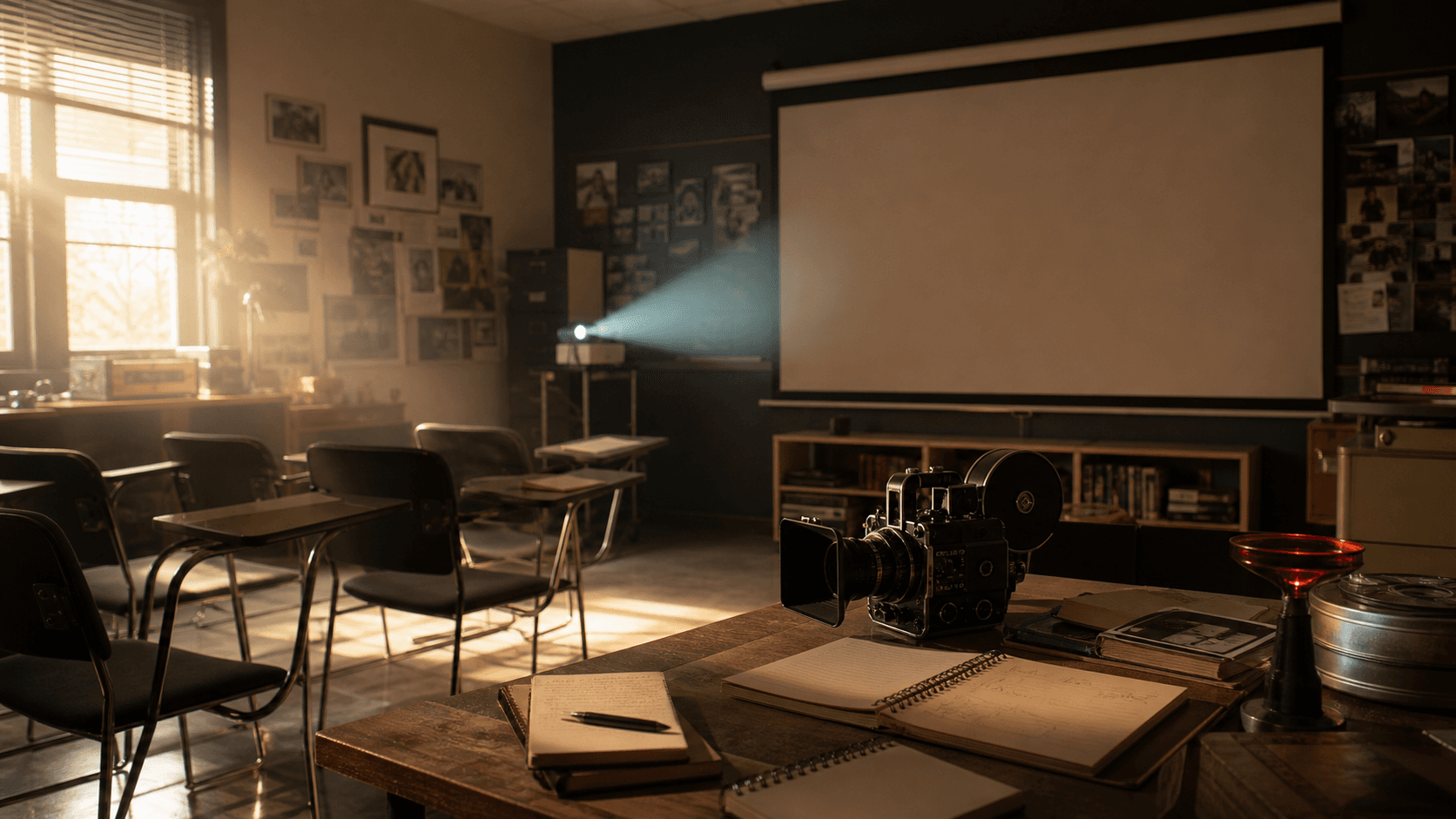
Cycle 1 introduces students to IB Film, the rhythm of the course, and the kind of classroom culture I want to build. Across four classes, students begin forming trust, explore the IB Film Guide, learn the basic assessment structure, and complete their first creative exercises. The goal is simple: make them feel welcome, curious, and ready to watch with attention and create with intention.
Intro
What do you want to say, what are you trying to say through this incredible medium that is film and television?

Cycle One is where everything begins, not only the course content, but also the kind of classroom we want to create together. Before students can analyse films, operate cameras, collaborate on productions, or worry about IB assessments, they need to feel that they belong in the room and that once they cross that doorway, it’s a safe space.
This cycle is built around four classes. It introduces students to the possibilities of IB Film, gives them their first taste of film analysis and production, and allows me to learn who they are, where they come from, what they watch, and what they may already know how to do.
I deliberately avoid explaining the IB Film Guide or the formal assessments in the first class. There will be plenty of time for that. On the first day, I want students to understand why film is such an extraordinary contemporary art form and why this course can become one of the most exciting experiences of their IB journey.
Cycle Overview
At my school, a cycle follows an eight-day rotation. I normally teach a class on alternate days (Days 1, 3, 5, and 7), which gives me four meetings during the cycle. This also means that students usually have a weekend before our final class.
That rhythm shapes the way I assign homework. I rarely give students a new task from one class to the next. Instead, I introduce the cycle assignments during the first class and collect them during the fourth. Students have time to think, experiment, ask questions, and complete the work without feeling that every class ends with another deadline. Check your school’s homework policy. At mine, it’s expected the student to dedicate 30 min per subject per day so in a full cycle they can watch a movie, for example.
Cycle One moves from connection to course orientation, then from reading film to recognising genre and cinematic conventions. Alongside that progression, students complete two small production exercises that give me an early sense of their interests, instincts, and existing technical abilities.
Essential Questions
Why are we here, and what do we hope to discover through this course?
What makes film different from other art forms?
How do filmmakers communicate ideas and emotions through images and sound?
How do our countries, cultures, and personal experiences shape the films we enjoy and the way we interpret them?
How much can a filmmaker communicate in a single shot?
Core Components
This first cycle introduces students to several ideas that will return throughout the course:
Film as a contemporary, collaborative art form.
The classroom as a safe place for curiosity, experimentation, and creative risk.
Film language as a system of visual and sound choices that creates meaning.
The relationship between personal taste, cultural background, and cinematic interpretation.
The basic structure and expectations of IB Film.
Genre and tropes as tools filmmakers can follow, combine, question, or subvert.
Production exercises as opportunities to experiment rather than demonstrate perfection.
Class Sequence
| DAY | SESSION | TYPE | STRAND |
|---|---|---|---|
Syllabus | |||
| 01 | A Timeline-Based Approach to Teaching IB Film | Syllabus | |
Introduction | |||
| 01 | Cycle 1 - Class 1 - Welcome | Introduction | |
| 02 | Cycle 1 - Class 2 - IB Film in a Nutshell | Lecture | Introduction |
Reading Film | |||
| 01 | Cycle 1 - Class 3 - Film Language and Reading Film | Lecture | Reading Film |
Assessment | |||
| 01 | Cycle 1 - Class 4 - IB Assessments Quiz and One Shot Exercise Presentation | Quiz | Assessment |
Classroom Activities
The three-part first-day icebreaker
The introductions are designed to move gradually from something easy to something more creative. Students first explain why they are in the course and share their cultural background. They then talk about a good film they watched during the summer. After the room has warmed up, we move into Two Truths and a Lie.
The Movie Poster of My Life activity closes the class by turning personal information into a simple cinematic concept. It also gives the first day a creative ending instead of finishing with rules, deadlines, or assessment terminology.
Using students’ film choices
The favourite-film conversation and video are not random activities. Their answers help me make the course more responsive. If several students are interested in horror, animation, science fiction, documentary, or films from a particular culture, I can look for appropriate opportunities to bring those references into future lessons.
Their videos also give me an informal picture of the skills already present in the room. A student may reveal experience with editing, acting, camera movement, composition, lighting, sound, graphics, or presentation without having to complete a formal technical test.
Assessments
Cycle One contains two low-stakes assignments and one introductory quiz. Both are introduced at the beginning of the cycle and submitted in Class 4.Full instructions, resources, and assessment details are provided on the relevant class pages.
1. Favourite Film: 90-second video
Students create a 90-second landscape video explaining what their favourite film is and why it matters to them. This is a completion-based diagnostic task that helps me understand their cinematic interests and what production skills they may already feel comfortable using.
The assignment is introduced in Class 1 and submitted in Class 4.
2. One Shot Exercise
Students create a short film using one continuous shot. The exercise introduces intentional framing, blocking, camera placement, movement, sound, and visual storytelling without relying on editing between shots.
The exercise is announced in Class 1, explained fully in Class 2, and submitted in Class 4. You can have the whole explanation, samples and rubric here on this page.
3. IB Film Assessments Quiz
Class 4 begins with a quiz based on the IB Film Guide and the assessment overview presented in Class 2. The quiz checks whether students understand the basic structure and expectations of the four formal IB Film assessments.
The quiz is normally open notes and takes approximately half of the class. However, I make it clear that the open-notes format depends on students maintaining the focused and respectful classroom environment that allows the course to work properly.
Reflection & Growth
By the end of Cycle One, students should feel that they have entered the course rather than simply received information about it. They will have met one another, shared something about their cultures and cinematic interests, encountered the larger possibilities of IB Film, analysed how film language creates meaning, explored genre conventions, and completed their first two small production exercises.
I will also know considerably more about the group. I will have a clearer sense of their personalities, cultural references, favourite films, confidence in front of a camera, existing production skills, and willingness to experiment. That knowledge helps me adapt the course to the actual students in the room.
Teacher’s Notes
The first cycle establishes habits that will continue throughout the course. Every cycle begins with the assignments clearly announced, and those assignments are normally due in the final class of the cycle. Because of the eight-day rotation, students usually have a weekend to work before the deadline.
I almost never assign substantial homework from one class to the next. Film work needs time for planning, finding locations, coordinating with people, recording, editing, discovering that something has gone wrong, and trying again.
The first class should remain welcoming. Resist the temptation to explain everything because everything feels important. The Film Guide, assessment percentages, criteria, file-naming rules, submission requirements, and other exciting forms of administrative cinema can wait. On Day 1, connection is the curriculum.